EN
EN



The Ultimate Guide to Steel Grating: Types, Performance, Applications & Maintenance
For professionals in industrial, construction, and infrastructure sectors, selecting the right building material is crucial for ensuring project safety, durability, and cost-effectiveness. Steel grating, as a versatile structural material, has become the preferred choice for countless global projects due to its exceptional performance and flexibility. This comprehensive guide will delve into the classifications, core advantages, wide-ranging applications, and best practices for steel grating to empower your decision-making.
1.Diverse Classifications & Characteristics: Matching the Perfect Solution to Your Project
Steel grating is not a “one-size-fits-all” product. Understanding its different types is the first step in optimizing performance and cost.
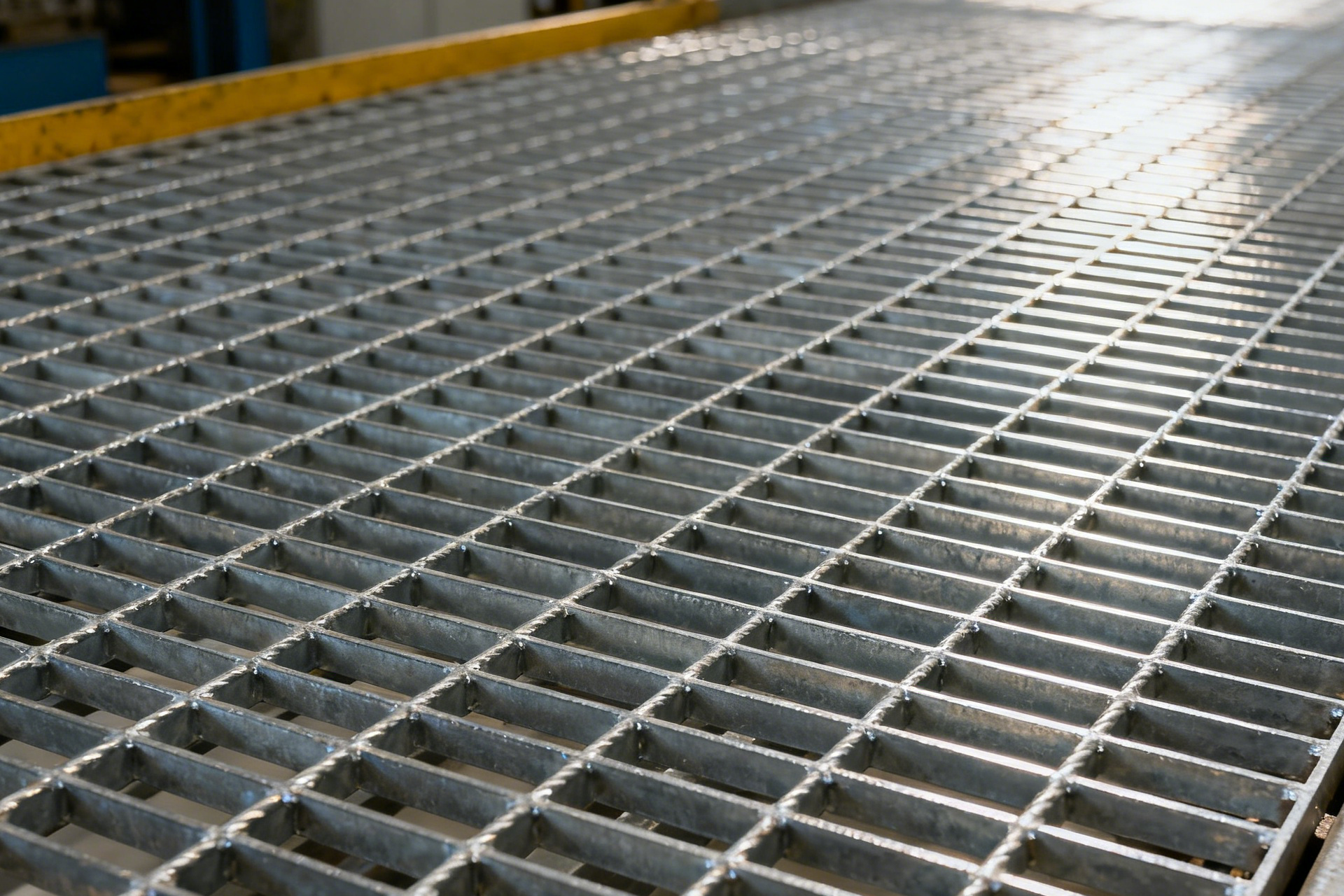
By Manufacturing Process:
Welded Steel Grating: Load-bearing bars and cross bars are firmly joined through resistance welding or arc welding. Its structure is extremely stable with ultra-high load capacity, making it ideal for heavy-duty industrial environments like power plant platforms, petrochemical walkways, and port loading areas. The welded joints provide outstanding integrity and torsional rigidity.
Press-Locked Steel Grating: Cross bars are mechanically locked into pre-notched load-bearing bars under high pressure, eliminating welding. It offers a smooth, aesthetically pleasing surface without weld bumps, perfect for pedestrian areas requiring a flush finish, such as mall atrium covers, municipal sidewalks, and landscape decks. It is also favored for its ease of installation.
By Material:
Carbon Steel Grating: The most economical and widely used type. Typically finished with hot-dip galvanizing for superior rust protection, suitable for most industrial and commercial environments like factory floors, storage platforms, and trench covers.
Stainless Steel Grating: Made from Grade 304 or 316 stainless steel, it offers unmatched corrosion resistance, standing up to chlorides, acids, alkalis, and extreme moisture. Essential for food processing plants, chemical plants, coastal facilities, swimming pool surrounds, and high-end architectural features.
Aluminum Grating: Exceptionally lightweight (about one-third the weight of steel), naturally corrosion-resistant, and non-magnetic. Commonly used in marine applications (ship decks), electronics manufacturing (non-interfering), and situations where structural load reduction is critical.
2.Outstanding Performance Advantages: Reliability Backed by Data
The grid design of steel grating is not just an aesthetic feature; it is the core of its superior engineering performance.
High Load Capacity & Light Weight: The unique open-grid structure achieves maximum strength with minimal material, offering an exceptional strength-to-weight ratio. For instance, a standard steel grating panel can be over 70% lighter than a solid steel plate of equivalent load-bearing capacity. This directly reduces transportation costs, demands on supporting structures, and simplifies installation.
Long-Lasting Corrosion Resistance: Surface treatment is key. Hot-dip galvanizing creates a zinc-iron alloy layer often exceeding 80 microns, which, according to ISO 1461, can provide over 20 years to first maintenance in typical atmospheric environments. Stainless steel materials inherently resist corrosion for even longer service life.
Inherent Safety & Functionality: The open design provides natural slip resistance, especially in oily or wet conditions. Serrated bearing bars can elevate the slip rating to R12/R13, complying with stringent OSHA standards. Meanwhile, the open area (typically 40%-70%) ensures excellent ventilation, light transmission, and drainage, preventing water pooling, gas accumulation, and reducing lighting energy costs—aligning with green building principles.
From heavy industry to modern architecture, steel grating finds utility everywhere.
Core Industrial Applications: As platforms, walkways, and stair treads in plants, ensuring safe personnel access and equipment maintenance. In oil & gas and power generation, it's used for equipment platforms, cable trays, and access gratings, with its ventilation aiding heat dissipation. Water treatment plants extensively use it as filter screens, walkways, and cover plates.
Municipal & Infrastructure: As trench drains, gully gratings, and tree grates, it combines high load capacity with efficient drainage. Its lightweight nature allows easy access for maintenance crews to underground utilities.
Commercial & Architectural Aesthetics: Architects leverage its modern look and transparency for building facades, interior railings, ceilings, and sunroom flooring. Various finishes (galvanized, painted, raw stainless) offer rich design possibilities.
Transportation & Marine: Used for footbridges, platform edges, ship decks, and offshore platforms, providing a safe, anti-skid surface capable of withstanding harsh environments.
3.Installation & Maintenance Essentials: Best Practices for Long-Term Performance
Proper installation and regular maintenance are crucial to ensuring steel grating achieves its designed service life.
Professional Installation Guidelines:
1. Preparation: Ensure supporting structures are level, secure, and spaced according to the design load requirements.
2. Safe Handling: Use slings or dedicated lifting clamps to prevent panel deformation.
3. Secure Fixing: Typically fix by welding (minimum of three continuous welds on supporting beams) or using dedicated galvanized or stainless steel fixing clips. Ensure no panel loosening or movement. Allow for thermal expansion gaps.
Simple Maintenance Routine:
1. Regular Inspection: Conduct routine checks biannually or annually, focusing on connection points and any signs of coating wear or rust.
2. Routine Cleaning: Remove dust, oil, and debris using water, mild detergent, and a soft-bristle brush. Pressure washing is effective.
3. Localized Repair: For minor coating damage, clean the rust and apply a zinc-rich paint to restore corrosion protection.
4. Future Trends: Towards Intelligence & Sustainability
The steel grating industry is actively responding to global technological trends.
Customization & Design Integration: Laser cutting technology enables the production of gratings in complex shapes and patterns, better serving personalized architectural designs.
Smart Integration: “Smart grating” with embedded sensors is under development for real-time monitoring of structural health, load, or environmental data, enabling predictive maintenance and safety management.
Material Innovation: Development of lighter, stronger, more durable composite gratings, and exploration of eco-friendly steels with higher recycled content to enhance sustainability.
Ready to Select the Ideal Steel Grating Solution for Your Next Project?
Our expert team provides end-to-end support, from product selection and technical consultation to custom fabrication, based on your specific application, load requirements, and environmental conditions. Contact us today for a free quote and a professional product catalog to build safer, more efficient, and longer-lasting projects together.